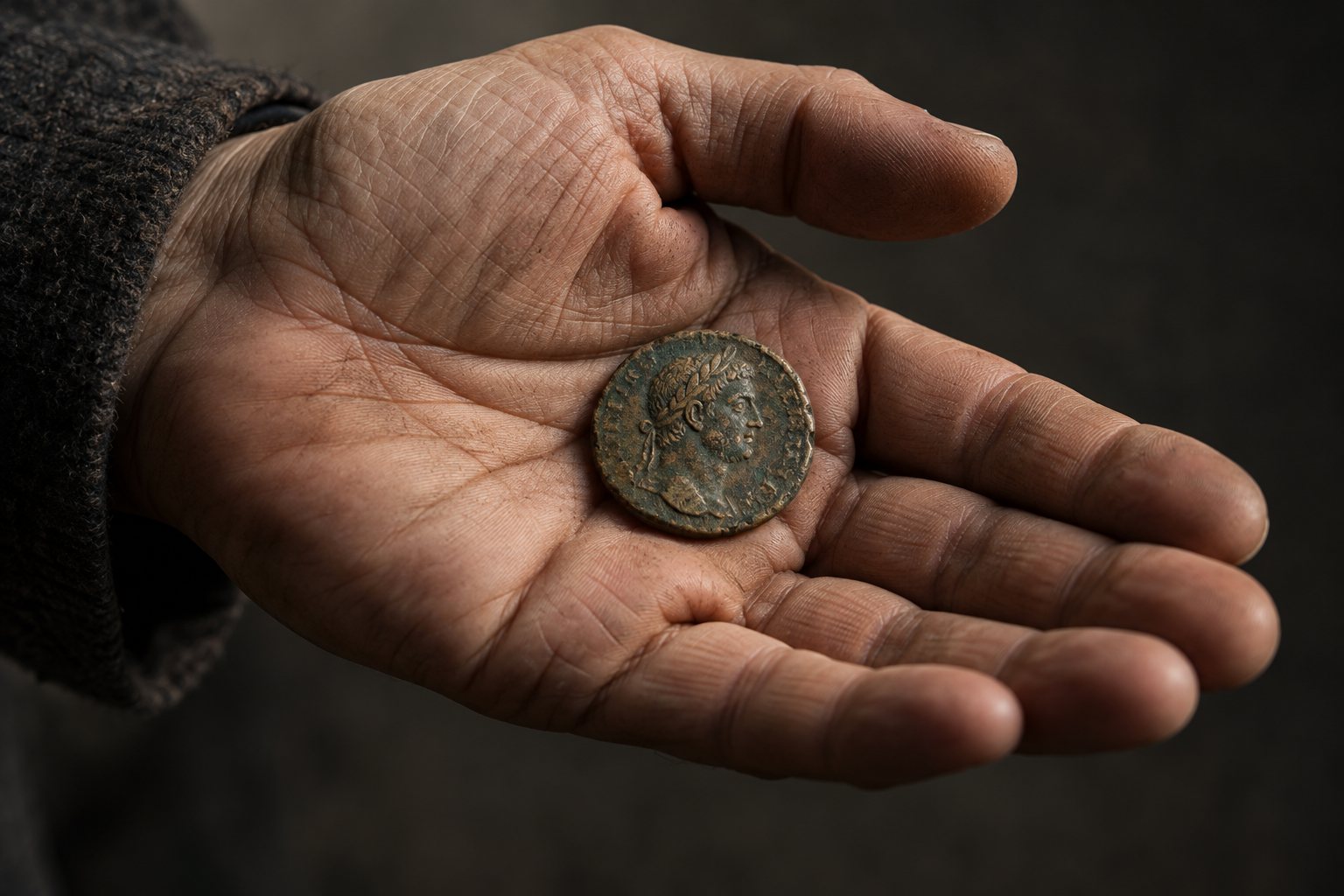
For most people in the Roman world, the only image of the ruler they would ever see was the one in their hand. Coins travelled where statues and inscriptions did not, and Roman authorities understood this.
In 44 BCE, Julius Caesar became the first living Roman to have his portrait placed on the coinage. It was a break with Republican custom, and it set a pattern. Under Augustus and his successors, the emperor’s face became a fixture of Roman money, and a new reign was quickly announced by new coins.
The message on the reverse
The other side mattered as much. Reverse designs changed often, and they were used to announce victories, honour virtues such as concord or piety, and commemorate buildings and events. A coin could carry news to provinces far from Rome.
A coin could reach people that no statue ever would.
Reading these designs today means reading what an authority wanted its people to believe, and that is why each record in the collection pays attention to both faces of a coin.