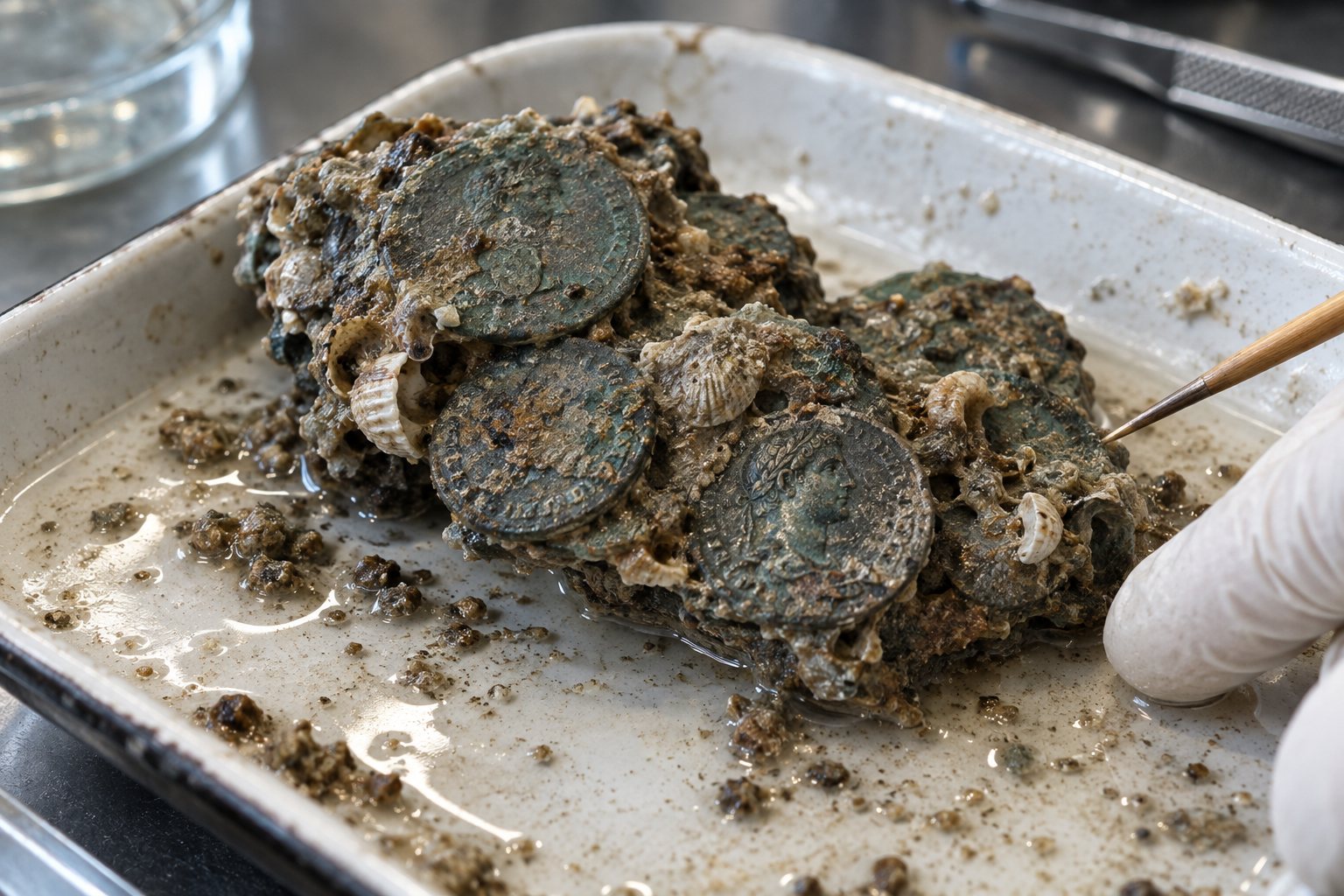
A ship that sinks takes a moment of history down with it. Its cargo, its fittings and the belongings of its crew are sealed together, often undisturbed for centuries.
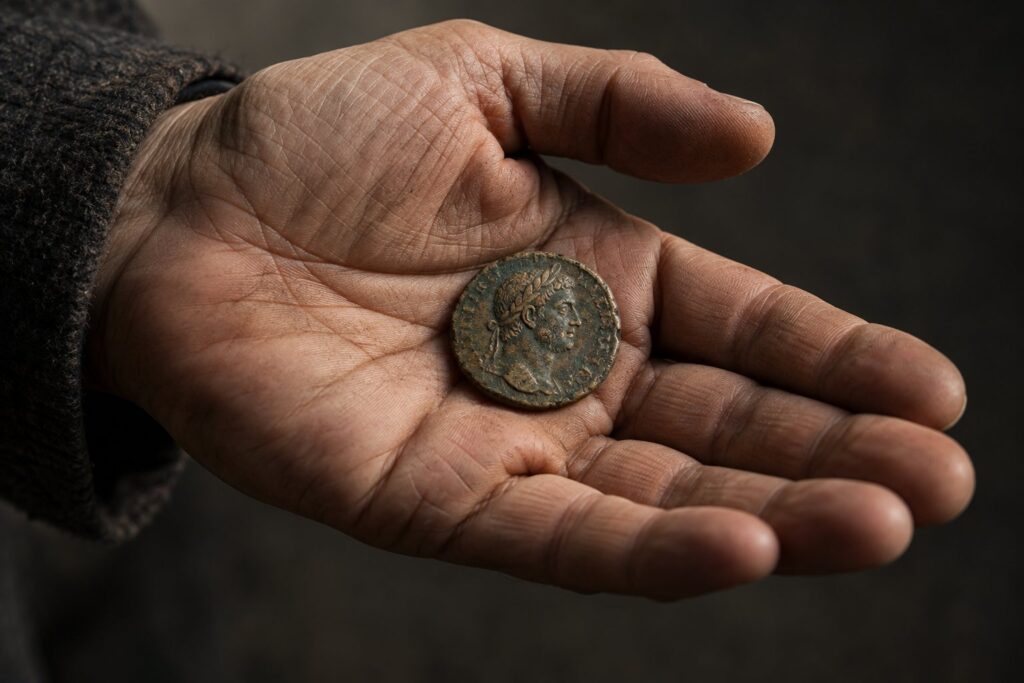
Coins are among the most useful things such a wreck can contain. Because coins can often be dated closely, they give archaeologists a firm limit: a ship cannot have sunk before the latest coin aboard was struck.
Evidence of movement
Where a coin was made, and where it ended up, also says something about the routes that connected the ancient world. Coins from distant mints found together in one cargo hint at the ports a ship visited and the markets its crew traded in.
The seabed is an archive of journeys that were never completed.
This is part of why provenance matters. Where an object was found, and how it came to be where it is now, is part of its history, and the collection records it whenever it is known.